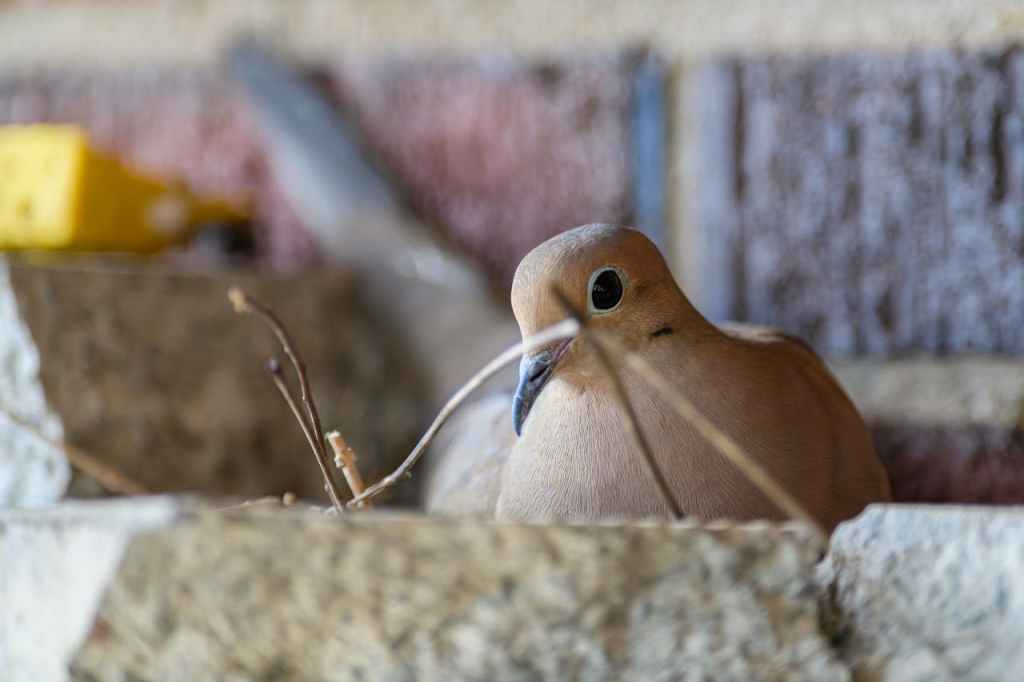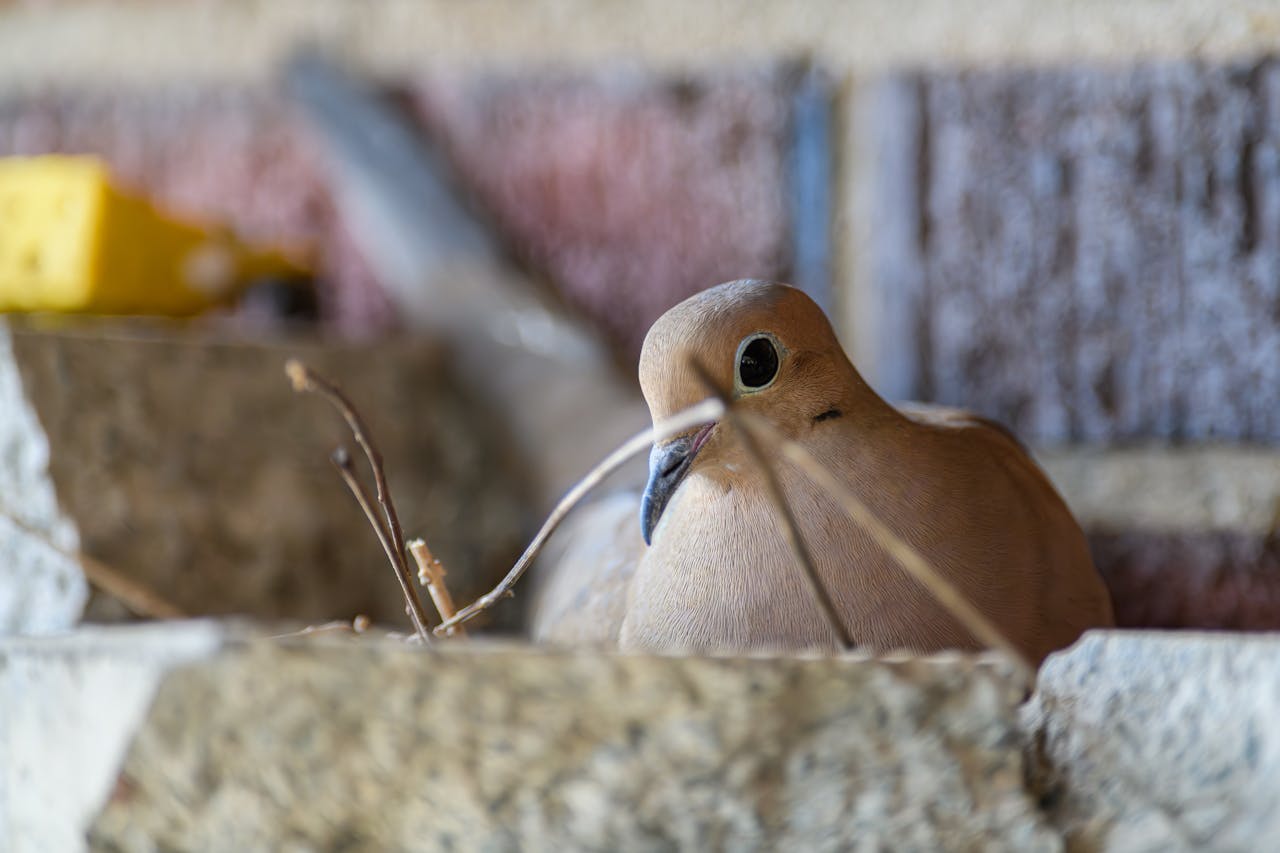
A Dialogue Between a Bird and Me
I came from all those paths,
With a heart heavy and low,
No more trees were there,
Few were left to grow.
At night something occurred,
A scene I hadn’t known:
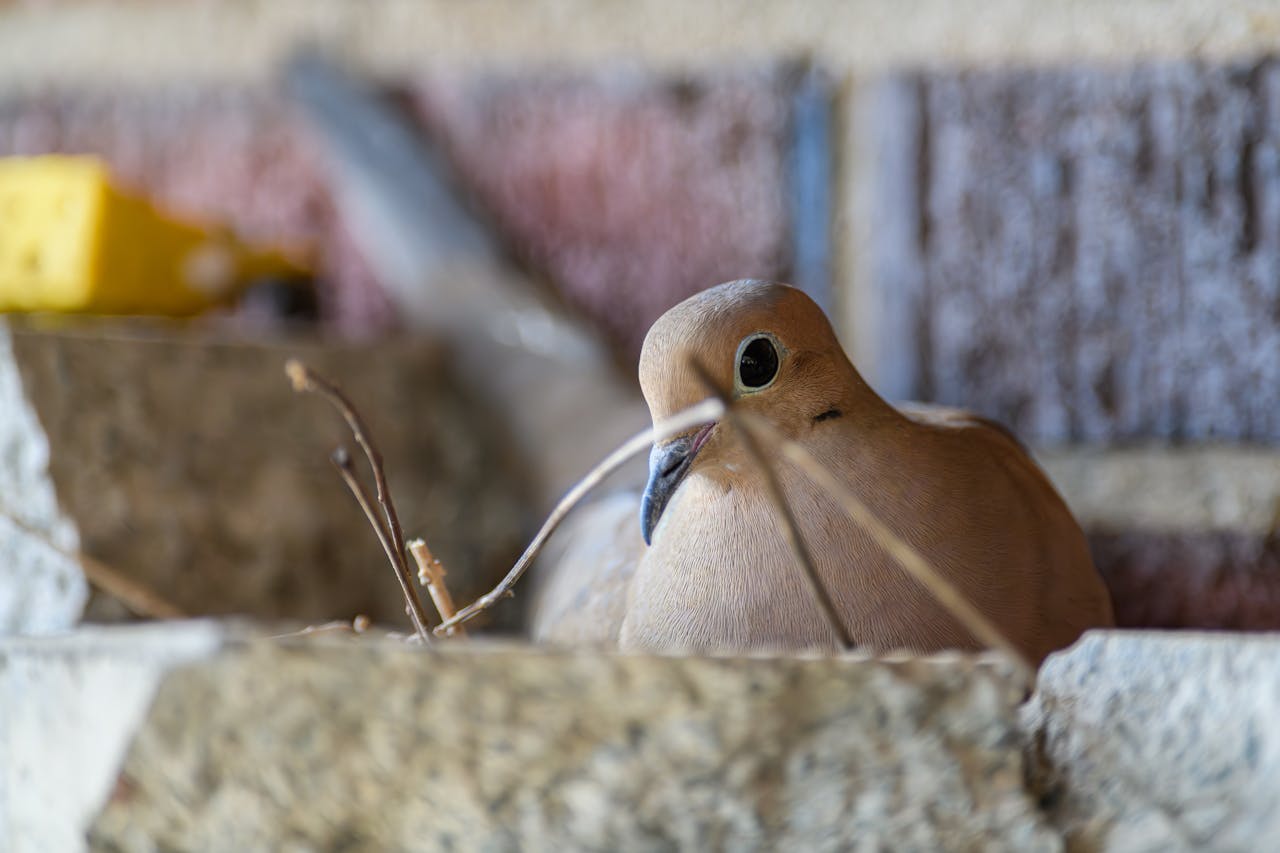
A bird came to my sill.
Forlorn, she watched my bed.
She called and asked with a chirp
To build her nest and stay.
I told this guest of honor then:
“Why do you choose this place?
Fairer sites your nest must crave.”
“How I wish that I could build
A nest in a forest space,
But men have come with bitter haste
To bring my home to waste.
The trees are full, every branch and stem.
And those that still remain?
They soon will meet their fate,”
the bird said with regret.
“But, is it truly so dire?
Come in, step inside and rest,
I will listen to your tale.”
“I come to you in this hour of grief.
Alone and lost, with no relief;
I hear the cry of every tree.
I speak for them; their pain I feel.”
Meanwhile, I watched from inside
With sorrow that I could not hide,
Waiting for my feathered friend
To tell her tale until the end:
“Many years ago, long past—
Before you were even born —
Our kin lived in a world so vast,
There was beauty all across.
No man had reached this soil as yet.
All was wild, a green sunrise;
Then men arrived with no regrets,
And brought the land’s demise.
Giving no thought to what we needed.
they began to destroy and tear;
We tried to plead against their greed
For our lives, for the land we share,
For the simple wish to live in peace
For harmony, free from despair.
No one heard our quiet plea;
A dark nothing took our forest,
and swallowed all the trees,
And with them, our heart’s liberty.
They have destroyed my home!
Can you understand and see?”
“What a sad story!”, I said.
“How much grief for you to bear!
“I wish that I could turn the wheel
Of time to the very start;
To give you back what they did steal,
Your world, your home, your heart.
To see you happy and healed again,
If only this wish I could grant.
But since we face this reality,
In my window please make your nest.
And bring all those who wish to flee.
and need a home to rest—
doves, pigeons, blue jays and crows—
I welcome all of you!
All living creatures on Earth,
must live as you once could!”
And so the little bird did stay,
built her nest in my frame.
If only a tree could grow again,
And offer her branches for rest.
(1992)
When I was 15, a bird landed on my window and stared at me for a long time while I studied in bed.
Since I was 7, practically the entire neighborhood in that urban area had been cutting down the enormous Dominican mahogany, úcar, and other huge trees that the developer had insisted on planting there after laying all that cement.
“Why are they cutting down all the trees?” I asked, as the street was becoming bare of greenery and the sun beat down directly on our heads.
“Because they lift the sidewalks and people might fall.” That didn’t make sense to me. I rode my bike up and down the tiny hills created by the roots just fine. I even found it fun.
I don’t want them to cut down the trees, I thought, wanting to shout it.
That was my first process of grief. They didn’t hear the trees screaming. Nor did they hear me.
But they did listen to the overfed woman who would get up grumbling from her comfortable living room armchair to go out and curse her neighbor’s mahogany tree, which was filling her porch with leaves, before grabbing a broom to sweep them up again.
Until they killed the tree. More mourning. Less greenery. More heat.
When the bird visited me, I understood immediately. There was nowhere left to nest.
At school, I discovered the refuge of writing poetry, encouraged by a teacher who recited poems from memory—excerpts from the playwrights and poets of the Siglo de Oro, dialogues, couplets, ten-line stanzas. I was fascinated by how a story could be told with rhyme.
More than 30 years later, I read this poem and several things surprise me. I share them here as a way of honoring my sleepless adolescent, who deserved that this poem was read and understood:
- I was very young when I became acutely aware of the problem of environmental destruction.
- I joyfully learned to write verses for the ecological cause, which also served as a catharsis for the destruction I saw around me:
- The structure is free verse. Although it doesn’t have a rigid meter (like a sonnet), it has very marked rhythmic elements.
- There are irregular stanzas; some are quatrains (4 lines), others are quintets (5 lines), and there are longer sections of up to 18 lines. This allows the poem to breathe according to the intensity of the ecological message.
- It has sporadic assonance: the vowels rhyme, but not the consonants.
- It is constructed like a dramatic dialogue. The quotes help differentiate the voices between the teenager and the bird, similar to a fable or a short play.
- I quickly learned figures of speech:
- Personification: The bird has human faculties such as speech and feelings (loneliness, despair, memory). The barrier between humanity and nature is broken, and there is empathy for the suffering being.
- Metaphor: Implicit comparisons to give greater emotional weight to the story:
- “A dark nothing took our forest”: “Dark nothing” is a metaphor for the emptiness and total destruction caused by deforestation.
- “The end of this land”: A comparison of the end of an ecosystem with the tragic ending of a piece of literature.
- “Our heart”: Nature is not something external, but the vital center of the animals’ existence.
- Hyperbole (Exaggeration): To emphasize the magnitude of the disaster: “The trees, all of them, are occupied.” It highlights the critical lack of natural space and shows the bird’s desperation.
- Symbolism: The window is not just a physical place; it symbolizes the boundary between the human world and the natural world. The bird asking permission to nest there signifies that humans have so encroached upon nature’s space that nature now has no choice but to take refuge in the limited space humans grant it.
Thank you to my sleepless 15-year-old for such a beautiful and profound poem! I honor her, support her and thank her for having a compass pointing in the direction of ecology.

 A Mystic Writer